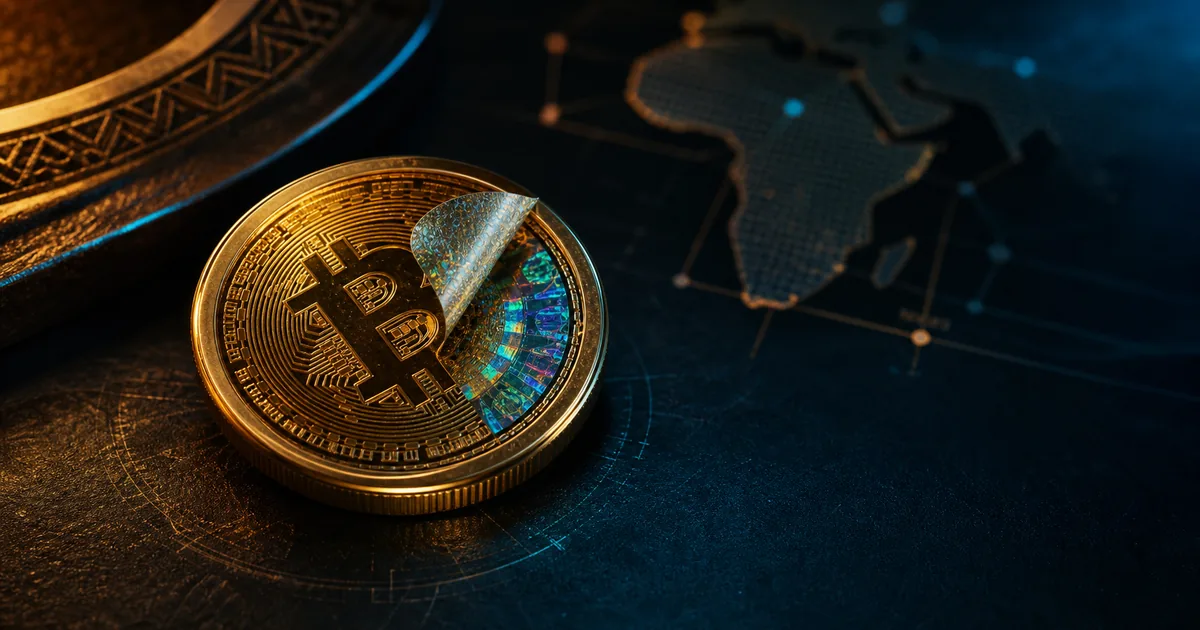
A rare 25 BTC Casascius physical bitcoin was opened this week, ending more than a decade of dormancy for one of Bitcoin's most recognizable collector objects.
The move matters because a Casascius coin is not just a souvenir. It is a physical object that contains access to real bitcoin. Once the tamper-evident hologram is peeled and the private key is imported, the bitcoin can move on-chain, but the collectible is no longer intact.
That is the trade-off. The owner converted a scarce loaded artifact into liquid bitcoin. Around a bitcoin price near $66,700, the 25 BTC alone was worth roughly $1.67 million. The full economic decision is harder to measure because intact Casascius coins can trade above their face bitcoin value when collectors price in rarity, denomination, condition and provenance.
What happened
Casascius coins were created by software engineer Mike Caldwell between 2011 and 2013. The concept was simple and risky in a very early-Bitcoin way: put a private key under a tamper-evident hologram, fund the public address with bitcoin, and let the physical object represent spendable BTC.
The coin reported this week was a 25 BTC piece from that era. When the hologram was removed, the hidden key could be used to transfer the funds to a new wallet. On-chain, that looks like old bitcoin moving after years of silence. Physically, it means the coin is "peeled" and no longer has the same collector profile as an unredeemed piece.
For collectors, that distinction is everything. A loaded Casascius coin has two forms of value: the BTC sitting at the address and the premium attached to the historical artifact. Peeling keeps the bitcoin but sacrifices much of the intact-coin premium.
Why this is more than collector trivia
The story is a reminder that bitcoin custody is not just a software problem.
Most African crypto users will never handle a Casascius coin, but the same custody principle shows up everywhere: whoever controls the private key controls the asset. That applies to a collectible coin, a mobile wallet, a hardware wallet, an exchange account or a crypto casino balance waiting to be withdrawn.
If you use an exchange, you are relying on account access, platform solvency and withdrawal rules. If you use a self-custody wallet, you are responsible for backups, seed phrase storage and device security. If you use a physical bearer instrument like Casascius, the object itself becomes part of the security model.
For users comparing wallets, the lesson is practical: storage design should match the amount at risk. A small betting bankroll can sit in a mobile wallet more easily than long-term bitcoin savings. Larger holdings usually deserve stronger separation, better backups and a clearer recovery plan. That is where hardware wallets such as Ledger Nano X start to make sense, but only if the seed phrase is handled carefully.
The casino and betting angle
Crypto gambling makes custody decisions more frequent because funds often move between exchanges, wallets and casino cashier pages.
A player might buy BTC or USDT through an exchange, withdraw to a wallet, deposit at a casino, then withdraw again after a session. Each step changes who controls the funds and what can go wrong. The Casascius redemption is a dramatic version of the same basic rule: a private key is not a symbol. It is the asset.
That matters when comparing crypto casinos. A fast withdrawal is only useful if the user has a wallet they can actually secure. A no-KYC offer is not useful if funds are left on a platform the user does not understand. A bonus is not worth much if the bankroll is exposed to poor wallet hygiene.
For an Africa-first route, the safer pattern is usually:
- Buy or receive crypto through a route you can document.
- Move meaningful balances off exchanges when you do not need active trading.
- Keep gambling bankrolls separate from long-term savings.
- Test small withdrawals before trusting a new operator with more funds.
- Never store seed phrases in screenshots, email drafts or chat apps.
Our guide to buying bitcoin in Africa covers the funding side. Our Africa crypto wallet guide covers the storage side.
Why old coins are waking up
Dormant bitcoin movements often attract attention because they are easy to overread. An old wallet moving coins does not automatically mean a market top, a panic sale or institutional activity. Sometimes it means an owner is consolidating, upgrading custody, transferring an estate, selling a collectible or simply testing access after years away.
Still, old-coin activity is useful because it shows that early bitcoin is not frozen in myth. Some of it still moves. Some of it sits behind hardware devices, paper backups, old laptops, institutional controls, physical coins and estate plans that may be tested only once every decade.
That should make modern users more disciplined, not more romantic. Bitcoin can survive for years. A bad backup process may not.
The bottom line
The 25 BTC Casascius redemption is a collector-market event, but it lands as a custody story for everyday crypto users.
The owner got access to the bitcoin. The trade-off was the loss of an intact historical collectible. For most users, the equivalent decision is simpler: keep the amount, the wallet type and the backup process aligned.
If a balance is big enough to hurt, it is big enough to deserve a real custody plan.
Sources checked
- CoinDesk report on the 25 BTC Casascius redemption, June 3, 2026
- Casascius physical bitcoin FAQ
- Bitcoin Wiki: Casascius physical bitcoins
- FinCEN virtual currency guidance, March 18, 2013